Build Better Money Habits with a Budget Tracker Journal Interior
If you have ever started a new budgeting system only to abandon it by the second week, you are not alone. The gap between wanting to manage your money better and actually doing it often comes down to the tools you use. A budget tracker journal interior offers a structured yet flexible framework that turns abstract financial goals into daily, actionable pages. Whether you are a freelancer juggling irregular income, a small business owner tracking multiple expense categories, or someone simply trying to gain clarity on where your money goes, having a dedicated, ready-to-use format can make all the difference.
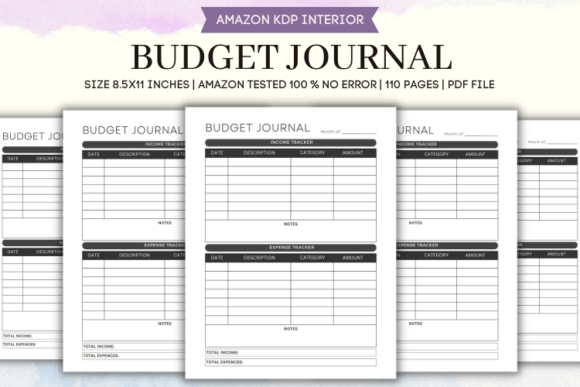
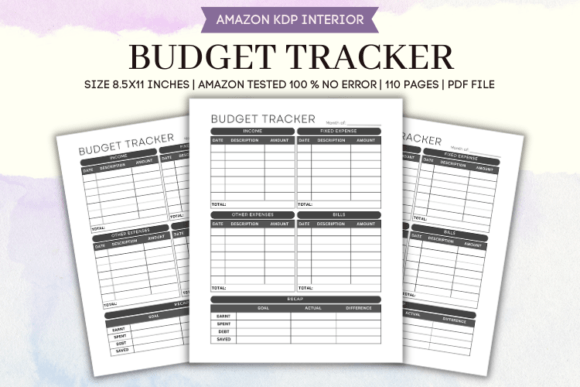
The version described here—a large 8.5 × 11 inch, 110-page interior with no bleed—is designed for quick upload to platforms like Amazon KDP or for local print. It has been tested thoroughly, so you are not dealing with alignment issues or missing page breaks. Instead, you get a clean, professional layout that works from the first page.
What Makes This Budget Tracker Journal Interior Different
Not all budget trackers are created equal. The most effective ones balance structure with flexibility, giving you enough guidance to stay on track without feeling rigid. This particular interior avoids the common pitfall of being either too sparse or overwhelmingly detailed. With 110 pages, it provides enough space for several months of tracking, depending on how granular you get, without becoming a bulky notebook you dread carrying around.
The large 8.5 × 11 size matters more than you might think. Standard pocket-sized trackers often force you to cram entries into tiny boxes, which discourages consistent use. A larger canvas invites you to write legibly, include notes, and actually enjoy the process. For print-on-demand publishers, this size also aligns well with customer expectations for a substantial, professional-looking journal.
No Bleed, No Headaches
The "no bleed" specification is one of those details that only becomes important when it is missing. In a no-bleed document, the design elements stay within safe margins, so nothing gets cut off during printing. For a budget tracker, where every column and row needs to remain intact, this is essential. You can upload the file to KDP or send it to a local printer with confidence, knowing that the layout will match what you see on screen.
Tested and Error-Free
One hundred tested pages with no errors sounds like a simple claim, but anyone who has dealt with misaligned tables, missing page numbers, or inconsistent headers knows how rare this is. This interior has been through that gauntlet, so you are not spending hours troubleshooting formatting issues. Instead, you can focus on content and marketing—or, if you are using it personally, on your actual financial goals.
Practical Applications Across Different Environments
A budget tracker journal interior is not limited to personal finance. Its structure lends itself to a wide range of uses, and the large format makes it adaptable for various contexts.
For Personal Finance and Household Budgeting
Tracking monthly income and expenses is the most obvious application, but consider going deeper. Use the pages to monitor spending patterns over several months, identify seasonal fluctuations in utility bills, or plan for irregular expenses like car maintenance or holiday gifts. The 110-page count gives you room to experiment with different tracking methods—envelope-style, zero-based, or a simple income-minus-expenses approach—without committing to one system forever.
For Freelancers and Solopreneurs
Freelancers often face the challenge of separating personal and business finances, especially in the early stages. A dedicated budget tracker used exclusively for business income and expenses can simplify tax preparation and help you spot trends in project profitability. The large pages allow you to list clients, project names, amounts received, and related expenses in a single view, making it easier to evaluate which work is worth repeating.
For Small Business Owners and Side Hustlers
When you are running a small operation, every dollar matters. Use the journal to track inventory purchases, marketing costs, and overhead alongside revenue. Over time, these records become a reference point for pricing decisions and cash flow planning. The no-bleed, print-ready format means you can produce physical copies for team members or clients who prefer working on paper.
For Educators and Workshop Facilitators
If you teach personal finance or run budgeting workshops, this interior can serve as a reproducible handout or workbook. The clean layout, tested formatting, and generous page size make it suitable for classroom use. Students can work through examples directly in the journal, and you do not have to worry about alignment issues when printing multiple copies.
For Digital and Hybrid Use
While the interior is print-ready, there is nothing stopping you from using it digitally. Load the PDF into a note-taking app like GoodNotes or Notability, and you have a fillable budget tracker on your tablet. The large page format still works well on screen, and the no-bleed margins give you comfortable tap targets if you are using a stylus. This hybrid approach appeals to users who want the structure of a printed journal with the convenience of digital storage.
Benefits That Go Beyond Tracking Numbers
The value of a budget tracker journal interior extends beyond simple record-keeping. When the layout is intuitive and the pages are plentiful, the act of tracking becomes a habit rather than a chore.
Improved Usability Through Consistent Layout
Every page follows the same grid and structure, so you do not waste time figuring out where to write. This consistency reduces friction and encourages daily use. Over weeks and months, the routine of filling in the tracker reinforces financial awareness without requiring extra mental effort.
Enhanced Efficiency for Publishers
For KDP publishers and content creators, a ready-to-upload interior saves days of work. You skip the trial and error of formatting tables, adjusting margins, and testing print files. That time can be redirected toward cover design, keyword research, and marketing—areas that directly impact sales.
Professional Appearance for Branding
A clean, spacious layout conveys professionalism. If you are publishing under your own brand, the large size and uncluttered pages reflect attention to detail. Customers who open the journal and see clear, readable tables are more likely to trust the quality of your other products.
Better Engagement Through Physical Interaction
There is a growing body of evidence that writing things down by hand improves retention and commitment. A physical budget tracker, or even a digital version used with a stylus, creates a tactile connection that a spreadsheet cannot replicate. The act of writing each expense helps you remember it and think twice before repeating it.
Real-World Examples and Observations
Consider a freelance graphic designer who tracks every project expense in a journal like this. After three months, she notices that small, recurring software subscriptions are eating into her profit margin. She switches to annual plans and saves over $200 a year—a change she would have missed without the detailed record.
Or take a small bakery owner who uses the journal to track ingredient costs week by week. When flour prices rise, he can see the impact immediately and adjust his pricing before margins shrink too far. The 110-page count gives him enough room to track a full season of operations, including holiday spikes.
Even for a personal user, the benefits compound. After six months of consistent tracking, patterns emerge: takeout expenses on stressful workdays, impulse buys during late-night online shopping, or overspending on categories you thought were under control. That awareness is the first step toward lasting change.
Practical Considerations When Choosing or Using This Interior
Before you upload or print, a few points are worth considering to get the most out of the product.
- Check your printer or POD specifications. Although the file is no-bleed and tested, always verify that your printer supports the 8.5 × 11 size. Most do, but some budget-friendly printers may have slightly different printable areas. Request a proof copy if you are using KDP.
- Decide on binding ahead of time. For a journal this size, spiral or coil binding allows the pages to lie flat, which is much more convenient for writing. If you are publishing a paperback, consider the gutter margin—though a no-bleed interior typically handles this well.
- Think about page usage. With 110 pages, you have options. You could dedicate one page per week for roughly two years, or use two pages per month for a detailed monthly overview. Match the structure to your audience’s expected usage pattern.
- Consider supplementing with dividers or tabs. While the interior itself is straightforward, adding section dividers for different months or categories can improve the user experience if you are creating a physical product.
- Test the digital workflow. If you plan to offer a digital version, test the PDF in a few popular annotation apps to confirm that text fields or forms work as expected. The tested, error-free guarantee gives you a solid starting point.
Ultimately, a well-designed budget tracker journal interior is a tool that respects your time. It does not demand that you learn a complicated system or adapt to a rigid format. Instead, it provides a spacious, reliable canvas that adapts to how you actually manage money. Whether you are publishing under your own brand, building a resource for clients, or simply taking control of your personal finances, the combination of tested quality, generous page count, and practical layout makes this a foundation worth building on.