Evaluating the HADITO 100 Puzzles and Solutions Puzzle for Cognitive Skill Development
When searching for resources to sharpen logical reasoning and mental agility, the HADITO 100 Puzzles and Solutions Puzzle and its companion, The HADITO 100 Puzzles Book with Solutions, frequently appear as prominent options. This collection has gained attention among puzzle enthusiasts and individuals seeking structured cognitive exercise. However, before committing time and resources, it is worth examining what this puzzle set offers, where it excels, and where it may fall short for certain audiences. This article provides a balanced evaluation to help you determine whether the HADITO 100 Puzzles align with your personal or professional goals.
What Is the HADITO 100 Puzzles and Solutions Puzzle?
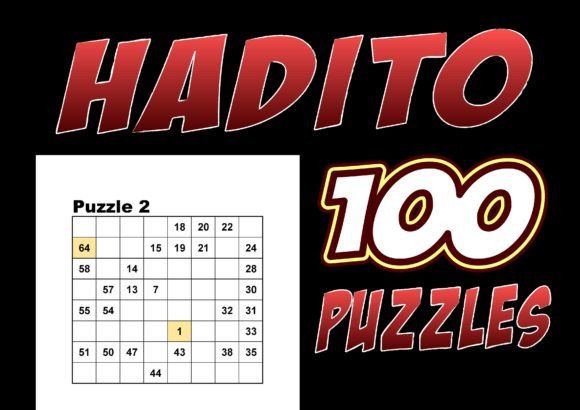
At its core, the HADITO 100 Puzzles and Solutions Puzzle is a curated collection of one hundred distinct puzzles, each designed to challenge different facets of problem-solving. The puzzles vary significantly in complexity, ranging from accessible brain teasers to more demanding logical conundrums. What distinguishes this collection is the inclusion of detailed, step-by-step solutions for every puzzle. This structure means that even if you encounter a particularly difficult challenge, you can work through the reasoning afterward, turning each puzzle into a learning opportunity rather than a dead end.
The HADITO 100 Puzzles Book with Solutions presents these puzzles in a clear, well-organized format. The presentation prioritizes readability, with each puzzle occupying its own space and solutions placed separately to avoid accidental spoilers. This design makes it suitable for both solitary practice and group puzzle sessions. The book does not assume prior expertise in puzzle solving, but it does expect a willingness to engage with unfamiliar logical structures.
Why Consider This Puzzle Collection?
People typically turn to puzzle collections like the HADITO 100 for several distinct reasons. Understanding your motivation is the first step in evaluating fit.
- Cognitive maintenance and improvement: Regular engagement with novel problems is widely associated with maintaining mental flexibility. If your goal is to preserve or enhance your reasoning skills over time, this collection offers a steady supply of fresh challenges.
- Structured learning: The inclusion of detailed solutions makes this a teaching tool as much as a testing tool. You are not left to wonder why a particular answer is correct; the reasoning is laid out for you.
- Entertainment with purpose: Many people enjoy puzzles as a leisure activity but prefer knowing that their time is also contributing to cognitive exercise. The HADITO puzzles blend recreation with intentional mental work.
- Preparation for assessments: Some readers use puzzle books to prepare for logical reasoning sections of standardized tests or professional exams. While not designed specifically for test prep, the skill overlap can be meaningful.
Benefits, Tradeoffs, and Practical Expectations
No single resource serves every need perfectly. Evaluating the HADITO 100 Puzzles requires looking at both its strengths and its inherent limitations.
Benefits
- Variety of difficulty levels: The puzzles are not uniformly hard. This variety allows you to build confidence on easier puzzles before tackling more demanding ones. It also means the collection remains usable as your skills improve over time.
- Clear solution walkthroughs: Unlike many puzzle books that provide only final answers, the solutions here explain the logical steps. This feature is invaluable for learning new problem-solving strategies and for understanding where your own reasoning may have gone astray.
- Portable and screen-free: The physical book format means you can engage with it without digital distractions. For those who already spend excessive time on screens, this is a genuine advantage.
- Self-paced: You control the speed and frequency of your practice. There is no timer, no competition unless you create one, and no external pressure.
Tradeoffs and Considerations
- No progressive structuring: While the puzzles vary in difficulty, they are not necessarily arranged in a deliberate progression from easiest to hardest. Some readers may find themselves jumping between difficulty levels without a clear sense of advancement. If you prefer a strictly graded curriculum, this could feel disorganized.
- Limited puzzle types: The collection focuses heavily on logic puzzles, pattern recognition, and deductive reasoning. If you are seeking math-heavy puzzles, lateral thinking exercises, or visual-spatial challenges, the HADITO collection may not cover those areas comprehensively.
- Single-session use: Once you have worked through a puzzle and reviewed its solution, the immediate challenge is gone. While you could revisit puzzles later, the element of surprise and discovery is lost. This means the collection has a finite lifespan for repeated use.
- No digital interactivity: For some people, the absence of hints, timers, or adaptive difficulty makes a physical book less engaging than a puzzle app. If you value interactive feedback, a digital product may be more motivating.
Situations Where the HADITO 100 Puzzles Is a Strong Fit
Certain contexts make this collection particularly effective. Here are scenarios where it aligns well with common reader goals.
- You are building a daily mental exercise habit: The book's hundred-puzzle count gives you roughly three months of puzzles if you solve one per day. This makes it a natural fit for someone establishing a consistent cognitive routine.
- You learn best by studying worked examples: If you benefit from seeing how an expert reasons through a problem, the detailed solutions are a major asset. You can attempt a puzzle, check your approach, and then study the solution to refine your technique.
- You enjoy solitary, focused problem solving: The book is designed for individual use. There are no team-based puzzles or multiplayer components. If you prefer quiet, independent work, this is appropriate.
- You want to supplement other cognitive activities: The HADITO puzzles work well as a complement to other forms of mental exercise, such as reading, writing, or learning a new skill. They provide a concentrated burst of logical effort in a manageable package.
When Alternatives May Be Worth Considering
No collection is universally optimal. In the following situations, exploring other options may serve you better.
- You need a progressive curriculum: If you want puzzles that start very easy and gradually increase in difficulty with clear milestones, consider puzzle series that advertise graded difficulty levels. Some online platforms offer adaptive puzzles that adjust to your performance in real time.
- You prefer interactive or timed challenges: Digital puzzle apps often provide immediate feedback, hints, timers, and leaderboards. If competition or gamification motivates you, a screen-based alternative may hold your attention longer.
- You are focused on a specific puzzle type: For example, if your primary interest is in mathematical puzzles or visual-spatial problems, seek a collection dedicated to that domain. The HADITO puzzles are broad but not deep in any single category.
- You want to share the experience with others: While you can certainly discuss the puzzles with friends, the book is not designed for group play. If you are looking for team-based challenges or cooperative problem solving, consider escape room style puzzles or collaborative puzzle games.
- You have already solved many similar puzzle collections: If you have worked through several logic puzzle books, you may find the HADITO puzzles familiar rather than novel. In that case, a more specialized or advanced collection might better stretch your abilities.
Practical Decision-Making Insights
Choosing whether to invest in the HADITO 100 Puzzles and Solutions Puzzle comes down to aligning its characteristics with your personal needs. Here are a few questions to ask yourself before deciding.
- What is your primary goal? If your aim is to build a consistent puzzle-solving habit and learn from structured solutions, this collection is well suited. If your aim is to master a specific type of puzzle or to be challenged by progressively harder material, you may need to supplement it with other resources.
- How do you prefer to learn? People who learn effectively by studying examples and then applying similar logic will benefit greatly from the solution walkthroughs. People who prefer trial-and-error with immediate feedback may find the book format too passive.
- What is your budget and time commitment? The book represents a one-time purchase with a finite number of puzzles. Calculate the cost per puzzle and compare it to digital subscriptions that offer unlimited or adaptive content. Also consider how much time you realistically have per week for puzzle solving.
- Do you value portability and simplicity? A physical book never needs charging, requires no internet connection, and can be used anywhere. If you frequently find yourself in situations where screen use is impractical, this is a meaningful advantage.
Determining Alignment With Your Goals
For many readers, the HADITO 100 Puzzles and Solutions Puzzle occupies a useful middle ground. It is more substantial than a casual puzzle app but less structured than a formal course. It offers variety without overwhelming choice, and it provides answers without spoon-feeding. The book respects your ability to struggle with a problem while also ensuring you never remain stuck permanently.
If you are the type of person who enjoys working through a problem at your own pace, who values understanding the why behind an answer, and who appreciates having a tangible resource you can return to, this collection is likely a strong match. If instead you need external motivation, adaptive difficulty, or a highly structured learning path, you may want to explore digital alternatives or more specialized puzzle series.
Ultimately, the HADITO 100 Puzzles Book with Solutions delivers what it promises: one hundred puzzles with clear explanations, presented in a readable format. Whether that aligns with your goals depends on your learning style, your preferred level of challenge, and the role you want puzzle solving to play in your broader routine. By weighing the benefits and tradeoffs outlined here, you can make an informed choice that serves your cognitive development effectively.