Adults Hard Diamond Mazes Puzzles Vol-31: What to Know Before You Start
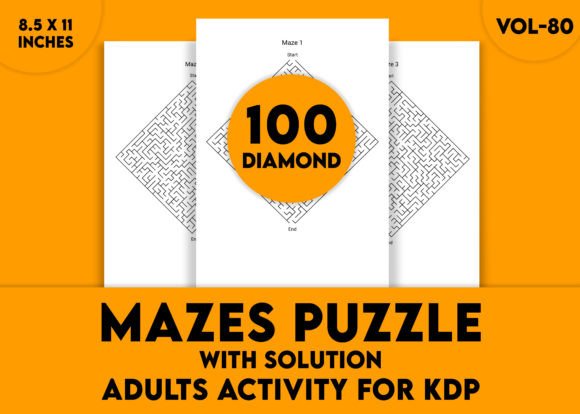
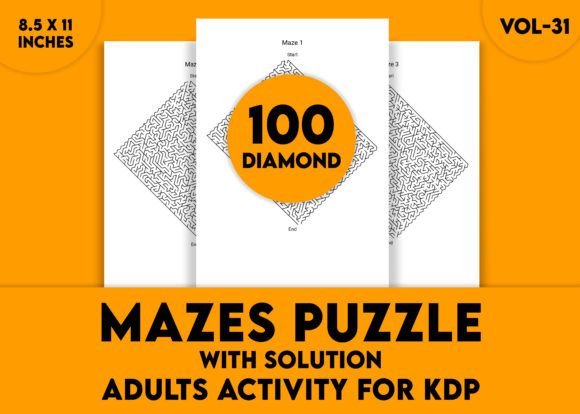
If you’ve picked up Adults Hard Diamond Mazes Puzzles Vol-31, you’re likely looking for a mental challenge that goes beyond casual puzzles. This collection features 100 intricate mazes printed one diamond-shaped puzzle per page on standard 8.5×11-inch sheets, with four solution diagrams per page at the back. The format is straightforward, but many people dive in without understanding how to get the most from it. Small oversights in how you approach these puzzles can lead to frustration, wasted time, or even giving up entirely. Let’s walk through the common mistakes readers make and how you can avoid them.
Underestimating the Complexity of These Mazes
The most frequent mistake is treating these diamond mazes like children’s puzzles or simple brain teasers. The word “hard” in the title is not decorative. Each maze is designed with multiple branches, loops, and dead ends that require careful backtracking and spatial reasoning. Beginners often rush in expecting a quick solve, only to hit a mental wall a few turns in.
This misunderstanding affects results and satisfaction. You might finish fewer puzzles than expected, feel discouraged, or assume the product is poorly designed. In reality, the difficulty is intentional and part of the value.
Better approach: Before starting, accept that each puzzle may take 10 to 30 minutes or more. Set aside uninterrupted time and treat the experience like a focused mental workout. If you’re new to hard mazes, begin with the first few puzzles to calibrate your expectations. The 100-puzzle volume gives you plenty of room to build skill gradually.
Ignoring the Editable PDF Feature
Adults Hard Diamond Mazes Puzzles Vol-31 comes as an editable PDF file. Many people either overlook this capability or use it only to print. The editable nature lets you solve directly on a tablet, phone, or computer using annotation tools. This is a huge advantage for portability and reuse, but only if you take advantage of it.
A common mistake is printing every page without considering digital solving. You might run out of paper, lose sheets, or struggle with cramped handwriting on small paths. Worse, once you print and solve a maze, you can’t easily erase and try again if you hit a dead end.
Better approach: Use a PDF annotation app such as GoodNotes, Notability, or Adobe Acrobat Reader on a tablet. Draw your path directly on the file. If you make a mistake, undo it instantly. You can also solve the same maze multiple times without wasting paper. If you prefer physical solving, print only a few pages at a time and keep the digital master clean for future use.
Overlooking the Value of the Solutions Section
Each page in the solutions section contains four maze solutions. Some people view this as a crutch and avoid looking at it entirely, while others flip to it too quickly at the first sign of difficulty. Both extremes are mistakes.
If you never check solutions, you may spend excessive time stuck on one maze, get frustrated, and abandon the volume altogether. If you check too soon, you bypass the cognitive work that builds problem-solving skills and spatial awareness. The sweet spot is knowing when and how to use the solutions as a learning tool, not an escape hatch.
Better approach: Set a time limit—say 20 minutes per maze. If you haven’t made progress after that time, take a short break and return fresh. If you’re still stuck after a second attempt, consult the solution for that maze. Study where you went wrong, trace the correct path, and move to the next puzzle. This turns a moment of frustration into a learning opportunity.
Rushing Through Without a Strategy
Many adults start a maze at the entry and immediately begin tracing paths, hoping to stumble on the exit. This reactive approach works for simple puzzles but fails here. Hard diamond mazes with loops and branches will punish random wandering. You’ll find yourself retracing the same dead ends and losing track of where you’ve already been.
This mistake wastes time and reduces the satisfaction of solving. It also trains your brain to approach problems impulsively rather than methodically.
Better approach: Before drawing your path, scan the maze for obvious dead ends, long straight sections, and central loops. Use a light pencil or digital pen to mark explored routes with small dots or hash marks. If you hit a dead end, mark it clearly so you don’t retrace later. Some solvers find it helpful to work backward from the exit. Experiment with different strategies—you’ll develop your own system within a few puzzles.
Printing Without Checking Page Settings
A surprisingly common oversight is printing the PDF without verifying page scaling and orientation. The puzzles are designed for 8.5×11-inch paper. If your printer defaults to “fit to page” or “scale to fit,” the maze may shrink slightly, making paths thinner and harder to follow. If you print on different paper sizes, the puzzle could be cropped or distorted.
This directly affects usability and comfort. A maze that’s too small strains your eyes; one that’s cropped may omit critical pathways. You might blame the puzzle for being poorly laid out when the real issue is your print settings.
Better approach: In your PDF viewer, set scaling to “actual size” or “100%.” Verify that the page orientation matches the file’s original layout (usually portrait). Print one test page first and compare it to the on-screen version. If you’re using a tablet, ensure the app displays the file at full size without zoom artifacts.
Misunderstanding the Diamond Layout
The diamond shape is not just a visual gimmick—it changes how you navigate. Traditional square mazes have clear top-down orientation, but a diamond maze introduces diagonal thinking. Paths may turn at 45-degree angles, and dead ends can hide in corners that feel unnatural at first glance.
Some solvers struggle because they keep expecting orthogonal turns and overlook diagonal connections. This leads to missed paths and unnecessary frustration.
Better approach: Spend your first five minutes studying the maze geometry. Notice how the diamond shape creates tight corners and angled corridors. Trace the outer boundary to understand the puzzle’s overall structure. Your brain will adapt after a few puzzles, but being aware of this upfront saves time.
Neglecting the Cognitive Benefits
Many people buy puzzle volumes for entertainment without considering the mental fitness aspect. Solving hard mazes exercises working memory, visual-spatial reasoning, and concentration. If you treat these puzzles as mere time fillers, you miss the chance to build valuable cognitive skills that transfer to work and daily life.
This oversight affects how you value the product. When a maze feels difficult, you might stop rather than push through, losing the growth that comes from struggle.
Better approach: Approach each maze as a focused mental practice session. Pay attention to how your brain navigates loops and dead ends. Notice when you feel stuck and how you work through it. Over time, you’ll likely find that your problem-solving confidence improves in other areas—whether that’s debugging code, planning a project, or navigating a complex decision. The puzzles become a tool, not just a pastime.
Not Revisiting Unsolved Mazes
The final common mistake is leaving difficult puzzles behind forever. Once you skip a maze or move on after checking the solution, you lose the opportunity to master that pattern. Hard mazes often repeat structural elements—loops, multiple branches, hidden shortcuts—and struggling with one teaches you how to handle similar ones later.
Better approach: Keep a short list of puzzles you found especially challenging. After finishing 10 or 20 mazes, return to one of the earlier difficult ones. You’ll often be surprised at how much easier it feels after practice. This reinforces your learning and builds genuine skill rather than just quick completion.
Final Thoughts on Getting the Most from Volume 31
Adults Hard Diamond Mazes Puzzles Vol-31 is a well-designed collection for anyone who wants a serious cognitive challenge. The 100 puzzles, diamond layout, editable PDF format, and separate solutions give you everything you need for a rewarding experience—if you avoid the common pitfalls. Start with realistic expectations, use the digital features to your advantage, develop a solving strategy, and treat each puzzle as a chance to build mental muscle. The satisfaction of finishing a hard maze is earned, and with the right approach, you’ll find yourself completing more and enjoying the journey along the way.