4 Recipe Journals for Every Home Cook, Baker, and Family Storyteller
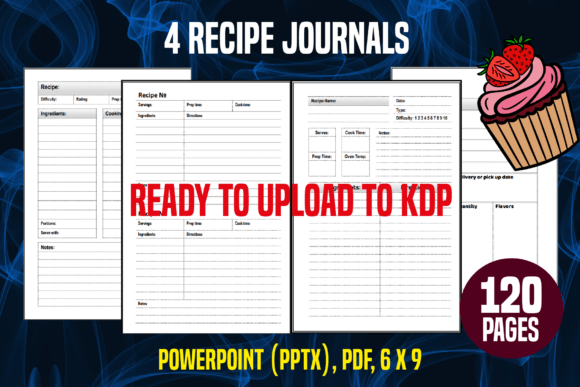
For anyone who loves spending time in the kitchen, recipes are more than just instructions. They carry memories of family meals, holiday traditions, and personal culinary experiments. Yet all too often, these valuable pieces of knowledge end up scattered across sticky note pads, browser bookmarks, or the margins of cookbooks. The 4 Recipe Journals collection offers a thoughtful solution to this common challenge. This set includes My Bread Making Journal, My Order Book Bakery Journal, Blank Recipe Book, and Recipes For My Daughter. Each journal serves a distinct purpose, helping different users organize, preserve, and pass along their cooking and baking knowledge in a meaningful way.
The Real Challenge: Why Recipes Get Lost Over Time
Most home cooks and bakers face a familiar frustration: you find the perfect bread recipe online, adapt it to your liking, and then forget where you saved it. Or you inherit a handwritten recipe from a grandparent, only to realize the paper is faded and the measurements are unclear. Over time, these precious pieces of culinary history can disappear entirely. The same problem applies to those who run home bakeries or take custom orders. Juggling multiple orders, ingredient lists, and special requests without a reliable system leads to mistakes, disappointed customers, and lost income.
The core need here is simple but powerful: people want a reliable, organized, and personal way to capture their recipes and make them accessible for years to come. They also want to share their love of cooking with the next generation. The 4 Recipe Journals directly address these needs by offering dedicated spaces for different types of recipe keeping, whether you are a dedicated bread baker, a small bakery owner, a collector of family favorites, or a parent hoping to leave a legacy for your child.
Breaking Down the Four Journals and Their Purpose
What makes the 4 Recipe Journals set especially useful is that it does not try to be a one-size-fits-all solution. Instead, each journal targets a specific area of recipe management, making it easier for you to choose the right tool for your current situation. Let us look at each one and the real-world problems it solves.
My Bread Making Journal: For the Dedicated Baker
Bread making is a science as much as an art. Small changes in humidity, flour type, or proofing time can completely change the outcome. Bakers who take their craft seriously know that keeping detailed notes is essential for consistent results. My Bread Making Journal provides dedicated pages for recording every variable: starter health, hydration levels, ambient temperature, mixing methods, baking times, and final crumb texture.
If you have ever baked a loaf that turned out perfectly only to struggle to replicate it the next week, this journal is for you. By tracking what actually happens during each bake, you develop a personal reference guide that is far more useful than any generic recipe book. Over time, you will notice patterns, troubleshoot failures more effectively, and confidently adjust recipes to suit your environment and taste.
Practical application: Use this journal to log one loaf per week. Note the flour brand, the water temperature, how long you kneaded, and how the dough felt. After a month, you will have a reliable set of notes that helps you bake consistently, regardless of changing conditions.
My Order Book Bakery Journal: For Small Bakery Owners and Home Bakers
Running a small bakery, even from home, involves managing multiple orders, deadlines, and customer preferences. It is easy to lose track of who ordered what, when it needs to be ready, and whether you have enough ingredients on hand. My Order Book Bakery Journal is designed specifically to solve these logistical headaches.
This journal helps you track orders from start to finish: customer name, order details, pickup or delivery date, special dietary requests, deposit information, and final payment. By keeping everything in one place, you reduce the risk of forgetting an order or mixing up customer requests. This not only makes your work less stressful but also builds trust with your customers because you show up prepared and accurate.
Practical application: At the start of each week, review your orders for the upcoming days. Note any special ingredients you need to purchase. Use the journal to confirm each order the day before pickup. This simple habit can eliminate most common order errors and free up mental energy for baking.
Blank Recipe Book: The Flexible Kitchen Companion
Not everyone wants a specialized journal. Many home cooks need a general, all-purpose place to collect their favorite recipes from various sources. The Blank Recipe Book fills this role perfectly. It offers blank pages that you can customize for any dish, whether it is a pasta sauce, a salad dressing, a casserole, or a dessert.
The real value here is that it becomes your personal cheat sheet. Instead of flipping through dozens of cookbooks or scrolling through websites, you have a single volume containing only the recipes you actually make and love. Over time, this journal becomes a reflection of your personal cooking style, full of modifications, notes, and ratings that make each recipe truly yours.
Practical application: Use this book to capture one new recipe each week. Write down the source, note any substitutions you made, and rate the result. After a year, you will have a collection of 52 tested, family-approved recipes that you can rely on for meal planning, entertaining, and passing along to others.
Recipes For My Daughter: A Legacy Beyond the Kitchen
Perhaps the most emotionally resonant journal in the set is Recipes For My Daughter. This is not just a recipe book; it is a personal letter, a family archive, and a gift of love all in one. Many parents worry that their children will not learn the family recipes or that certain dishes will be lost when they are gone. This journal provides a dedicated space to preserve not only the recipes but also the stories behind them.
You can write down your grandmother's famous pie crust, the holiday cookies your child always asks for, and the simple weeknight meals that defined family dinners. But more importantly, you can add notes about when to serve each dish, what memories it brings, and small tips that make it special. This turns a collection of recipes into a tangible piece of family history that your daughter can hold, use, and eventually share with her own family.
Practical application: Start by writing down the five recipes your family requests most often. For each one, add a short memory, such as "This was the cake I made for your first birthday" or "Your dad always asks for this on cold winter nights." Even if you only complete a few pages at first, the journal will already hold immense sentimental value.
How Different Users Can Approach These Journals
One of the strengths of the 4 Recipe Journals collection is that it adapts to different lifestyles and goals. Here are a few examples of how various users might use these journals in practice.
The hobbyist bread baker might use My Bread Making Journal as their primary tool, logging every bake and tracking improvements over time. They may not need the other journals immediately, but they will appreciate having a specialized space that respects the complexity of bread making.
The home bakery owner will find the most immediate relief from My Order Book Bakery Journal. By keeping all customer orders in one place, they reduce mental clutter and operational errors. They might also use the Blank Recipe Book to develop and refine new product ideas before adding them to their menu.
A parent with young children might focus on Recipes For My Daughter, building a collection over several years. They can involve their child in the process by letting them help choose which recipes to include, making the journal a collaborative family project.
The everyday home cook who simply wants to organize their cooking life can start with the Blank Recipe Book. It is a low-pressure way to begin capturing recipes without committing to a specialized format. Over time, they may find that certain areas of their cooking, such as bread or dessert making, deserve their own dedicated journal.
Practical Outcomes and Long-Term Value
Using the 4 Recipe Journals consistently leads to several concrete benefits. First, you eliminate the frustration of lost or forgotten recipes. Everything you care about lives in one of four well-organized volumes. Second, you become a more confident cook or baker because you have your own data to reference. Instead of guessing what worked last time, you can look it up. Third, you create something that outlasts you. The Recipes For My Daughter journal, in particular, becomes a family heirloom that can be passed down and added to by future generations.
Another important outcome is the reduction of stress around cooking and baking. When you have a system for capturing recipes and tracking orders, you free up mental space to actually enjoy the process. Cooking becomes less about scrambling to remember details and more about creativity, experimentation, and connection with the people you feed.
Considerations Before You Start
To get the most out of the 4 Recipe Journals, it helps to approach them with a clear plan. Start with the journal that speaks to your most pressing need. If you are overwhelmed by bakery orders, begin with My Order Book Bakery Journal. If you have been wanting to document family recipes for years, start with Recipes For My Daughter. Trying to fill all four at once can feel daunting, so focus on one until it becomes a habit.
Be consistent but not rigid. You do not need to write in the journal every single day. A few entries per week or even per month will still build into a valuable resource over time. The key is to make the journal a natural part of your kitchen routine, not a chore.
Also, consider the physical qualities of the journals, which are designed to be durable and practical. With 120 pages and a trim size of 6 x 9 inches, they are compact enough to keep on a countertop or in a kitchen drawer while still offering plenty of space for detailed notes. The high-resolution interior ensures that your handwriting and any small diagrams, such as scoring patterns for bread or assembly instructions for a layered dessert, remain clear and legible.
Final Thoughts
The 4 Recipe Journals collection is more than a set of notebooks. It is a toolkit for anyone who values the art of cooking, the science of baking, the discipline of running a food business, or the joy of sharing family traditions. Whether you are a novice home cook or an experienced baker, these journals offer a structured yet flexible way to capture what matters most about the food you make. They help you move from scattered notes and forgotten recipes to a trusted system that supports your goals and preserves your legacy. By investing a little time in using them consistently, you gain clarity, confidence, and a lasting record of your culinary journey. Visit the store to find the journal that fits your needs and begin building the recipe collection you have always wanted.