Adults Hard Rectangle Maze Puzzle Vol-55
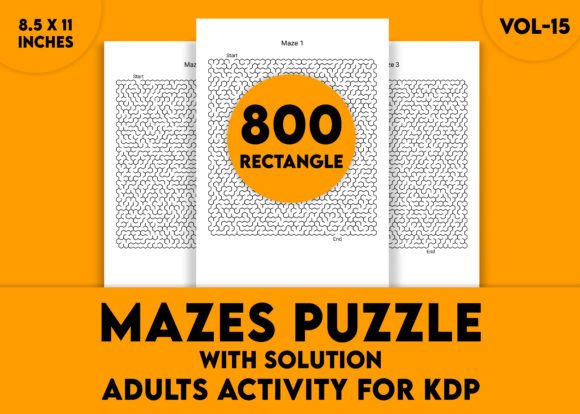
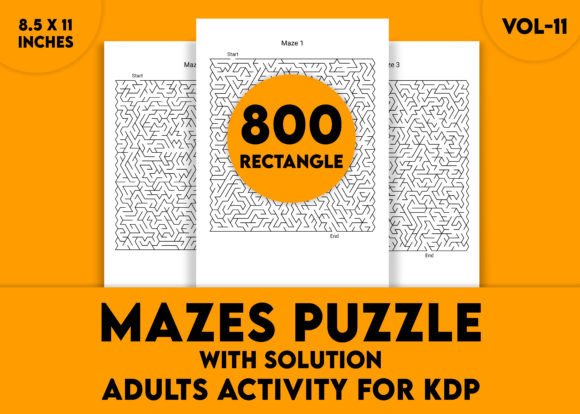
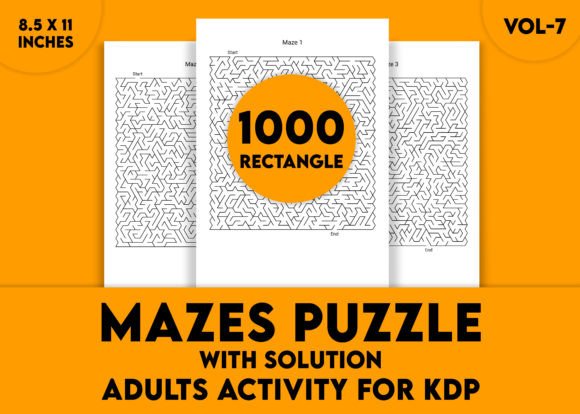
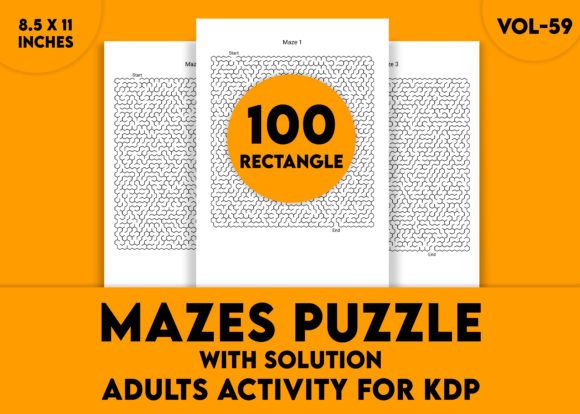
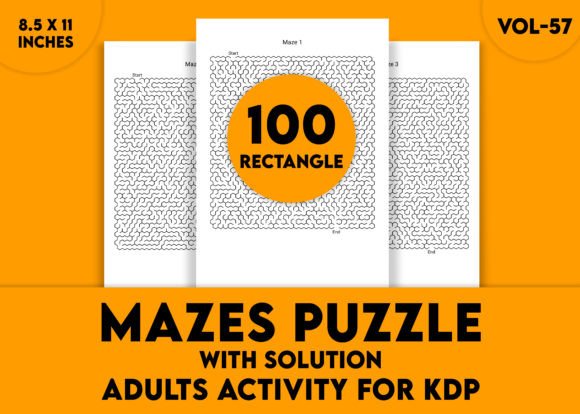
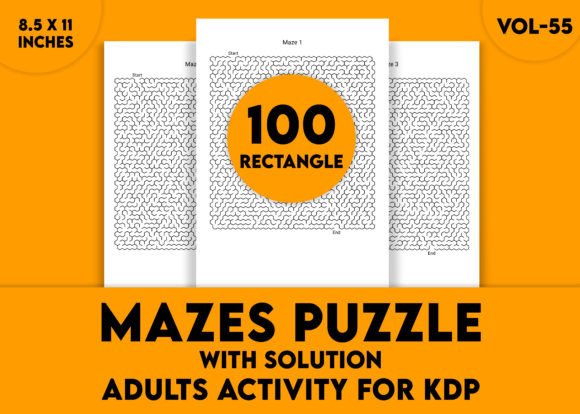
If you have ever picked up a maze book only to set it down in frustration a few minutes later, you are not alone. Many adults find that most maze puzzles either feel too simple, like a casual distraction, or so poorly designed that the solution path is nearly impossible to trace without guessing. Adults Hard Rectangle Maze Puzzle Vol-55 aims to strike a different balance: challenging enough to engage your mind, but structured so that each puzzle remains solvable with patience and strategy. This volume delivers 100 rectangle mazes on standard 8.5x11 inch sheets, with one maze per page and four solutions per page at the back.
Yet, even with a well-crafted puzzle book, there are common missteps that can turn an enjoyable mental workout into a frustrating experience. The mistakes often have little to do with the mazes themselves and everything to do with how you approach them, what you expect, and how you verify your progress. Understanding these pitfalls ahead of time can save you time, reduce irritation, and help you get the most out of every puzzle.
Why Adults Hard Rectangle Maze Puzzle Vol-55 Demands More Than Quick Guessing
Each maze in this volume features a rectangular layout filled with twists, turns, multiple branches, loops, and occasional obstacles or barriers. These are not the simple corridors you might recall from children's activity books. The design intentionally creates false leads and dead ends that look promising at first glance. The goal is not merely to reach the finish line, but to develop a systematic way of navigating complexity.
One common misunderstanding is assuming that speed matters most. Many people rush to trace a path, hoping to finish quickly, only to find themselves stuck in a loop or forced to backtrack repeatedly. This approach usually leads to frustration and a sense that the puzzle is unfair. In reality, the mazes are fair, but they reward methodical thinking over haste. Taking a few extra seconds to scan the overall structure before moving your pen or pencil can cut your solving time in half and make the experience far more satisfying.
Another overlooked detail is the paper size itself. Each maze is printed on a full 8.5x11 inch page, which gives you room to work comfortably. Some solvers try to solve these puzzles on a cramped desk or with poor lighting, which makes it harder to see subtle connections between paths. A clean, well-lit workspace and a fine-tipped pen or sharp pencil can make a significant difference in accuracy and comfort.
Mistakes That Undermine Your Puzzle Experience
The most common errors fall into a few categories: how you prepare, how you solve, and how you verify your solutions. Each one can turn a rewarding challenge into a tedious chore if left unchecked.
Choosing the Wrong Tool for the Job
It may sound trivial, but the writing instrument you choose has a direct impact on your solving experience. Thick markers obscure the path details and make it difficult to see where you have already been. Pencils with soft lead smudge easily and can create confusion as you work through multiple branches. Many solvers grab whatever is closest, only to regret it midway through a complex maze.
A better approach is to use a fine-tipped mechanical pencil or a ballpoint pen with a narrow tip. This lets you trace accurately without covering up important details. If you prefer to reuse the puzzles, place a sheet of transparent film or a page protector over the maze and use a dry-erase marker. That way, you can solve each puzzle multiple times or share the book with others without leaving permanent marks. This simple change costs almost nothing but saves you from having to buy a new book each time you want to revisit a favorite puzzle.
Starting Without a Strategy
Plunging into a maze without any plan is like navigating a new city without a map. You might eventually get where you are going, but you will waste a lot of time on wrong turns. The most effective solvers use a few reliable techniques. One is to trace from both the start and the finish simultaneously, working toward the middle. Another is to use a finger or the eraser end of your pencil to preview a path before committing with ink. A third method involves mentally marking dead ends as you encounter them, so you do not revisit them later.
Choosing a strategy before you begin reduces the cognitive load and lets your brain focus on pattern recognition rather than constant decision-making. You can also switch strategies if one is not working, but having a starting point prevents that initial floundering that drains motivation.
Ignoring the Solutions Section
This volume includes four solutions per page at the back of the book. Some solvers see this as cheating and never look at it, even when they are stuck. Others flip to the answer at the first sign of difficulty, robbing themselves of the problem-solving practice that makes puzzles valuable. Both extremes miss the point.
The solutions section is a learning tool, not a crutch. If you have spent a reasonable amount of time on a maze and feel genuinely stuck, checking the solution can teach you something about the maze's design. Pay attention to where you went wrong. Did you miss a turn because you were going too fast? Did you assume a path led somewhere it did not? Use the solution as feedback, not as a shortcut. Over time, you will need the answers less frequently because you will recognize patterns and avoid common traps.
Practical Checks Before You Begin Solving
Before you open the book and pick up your pencil, take a moment to evaluate a few things that many people overlook. These checks take only a minute but can prevent hours of frustration.
- Check the page for printing quality. Occasionally, a maze may appear slightly faint or have a crease that distorts a line. If a path is unclear, use the solutions page to confirm the intended route rather than guessing.
- Verify your lighting. Maze solving requires sustained visual focus. Dim light causes eye strain and makes it harder to distinguish between open paths and barriers. A simple desk lamp aimed at your work surface can make a surprising difference.
- Set a realistic time expectation. These are hard mazes. A single puzzle might take anywhere from five to twenty minutes depending on complexity and your experience level. Planning for that time window helps you stay patient and avoids the temptation to rush.
- Decide whether you will reuse the puzzles. If you plan to solve them only once, a fine pen is fine. If you want to solve them again later or share with a friend, use the transparent sheet method mentioned earlier. Thinking about this upfront saves you from regretting a permanent mark later.
How These Mistakes Affect Your Results and Satisfaction
Each mistake comes with real consequences, even if they seem minor at first. Using a thick marker may not ruin the puzzle, but it can obscure a crucial fork in the path, leading you into a dead end that you would have otherwise avoided. Starting without a strategy often means spending more time backtracking than solving, which turns a thirty-minute relaxation session into a drawn-out chore. Ignoring the solutions section entirely can leave you stuck on a single maze for so long that you give up on the entire book.
On the other hand, checking the solution too early prevents you from developing the mental resilience and pattern recognition that make harder puzzles easier over time. The goal is not just to finish each maze, but to become a better solver with each one. That growth requires the right balance of struggle and guidance.
Satisfaction comes from that moment when a complex path finally clicks into place. You see the route clearly, trace it confidently, and reach the exit with a sense of accomplishment. That feeling is harder to achieve when you have been fighting against poor tools, bad habits, or unrealistic expectations. Simplifying the practical side of solving lets you focus on the enjoyable challenge itself.
Practical Advice for Getting the Most Out of This Volume
Think of each maze as a short workout for your brain. Just as you would not start a physical exercise without stretching or using proper equipment, you should approach these puzzles with a little preparation. Here are a few concrete steps that experienced solvers use to maximize both enjoyment and skill development.
- Solve in short sessions. Instead of trying to complete five or six mazes in one sitting, solve one or two with full focus. Your concentration naturally wanes after about twenty minutes of intense visual work. Stopping while you are still engaged keeps the experience positive and leaves you looking forward to the next session.
- Review your completed mazes. After solving a maze, take a few seconds to look at the path you took. Notice where you hesitated and where you moved confidently. This reflection reinforces what you learned and helps you spot patterns that will serve you in future puzzles.
- Mix up your solving method. If you usually start from the beginning, try starting from the end for a change. Or try solving without touching the page at all, using only your eyes to trace the path. Each method exercises a slightly different mental skill and keeps the activity from becoming routine.
- Share the experience. Solving mazes can be a solitary activity, but discussing tricky sections with a friend or family member adds a social dimension. You might discover that someone else sees a solution path you missed, or you might enjoy explaining your own reasoning. Either way, it deepens your understanding of the puzzles.
Avoiding Common Misunderstandings About Maze Difficulty
Some solvers mistakenly believe that a hard maze must be unfair, full of random dead ends intended to trick them. In well-designed puzzles, every dead end serves a purpose. It misleads you because it looks like a valid path, not because the designer made a mistake. Recognizing this changes how you react when you hit a dead end. Instead of feeling frustrated, you can appreciate that the maze is working exactly as intended.
Another misunderstanding is that solving a maze quickly is the only measure of success. In reality, the value comes from the process itself. The mental focus, the quiet patience, the small triumph of finding the correct route after a few wrong turns, these are the real benefits. Speed is irrelevant. Some of the most rewarding solves take the longest because they require careful consideration.
Finally, do not assume that all mazes in this volume are exactly the same difficulty. The variety of twists, loops, and barriers means that some will be easier and some harder. If you hit one that feels too challenging, skip it and come back later. Your brain will continue working on it in the background, and you may solve it quickly when you return.
Making an Informed Decision Before Downloading or Buying
If you are considering purchasing Adults Hard Rectangle Maze Puzzle Vol-55, there are a few practical points to verify first. Check whether the PDF is editable, as stated in the features list. An editable PDF lets you solve digitally or print specific pages as needed, which is useful if you want to keep the book intact for future use. Confirm that the file is compatible with your device or software to avoid format issues.
Also, consider how you prefer to solve. If you enjoy working on paper, the large 8.5x11 inch format gives you plenty of space. If you prefer digital solving on a tablet, the editable PDF allows you to use a stylus and reuse each maze indefinitely. Knowing your preference ahead of time helps you choose the format that will give you the most value.
Finally, look at the solution layout. Four solutions per page means you can check your work without flipping through too many pages, but it also means the solutions are condensed. Make sure you can read them clearly if you need them. These small checks take five minutes but ensure that your purchase matches your expectations.
Maze solving is one of those rare activities that feels both productive and relaxing at the same time. With the right preparation and a bit of patience, Adults Hard Rectangle Maze Puzzle Vol-55 can provide hours of genuine mental engagement. Avoid the common mistakes, take your time, and enjoy the process of finding your way through each carefully designed rectangle. Your brain will thank you.