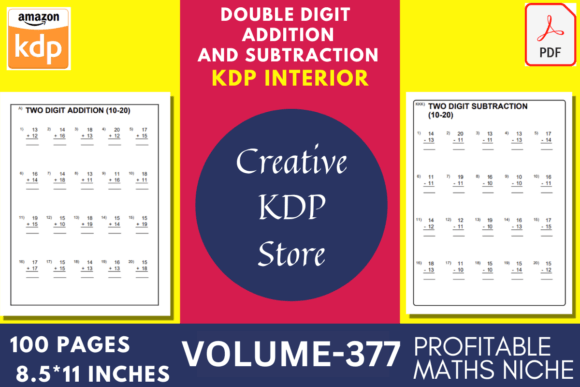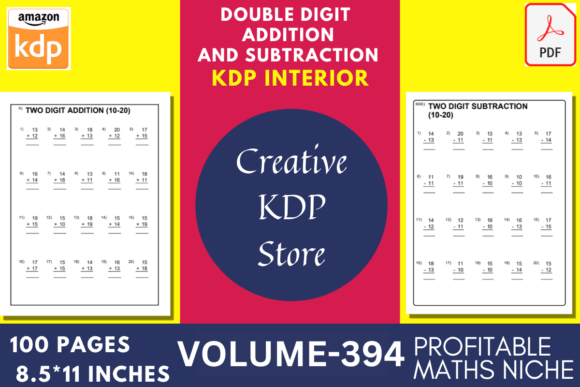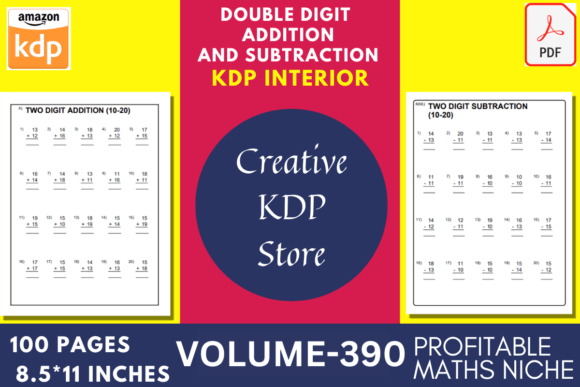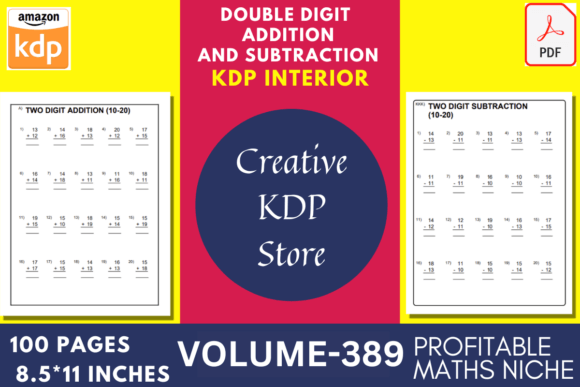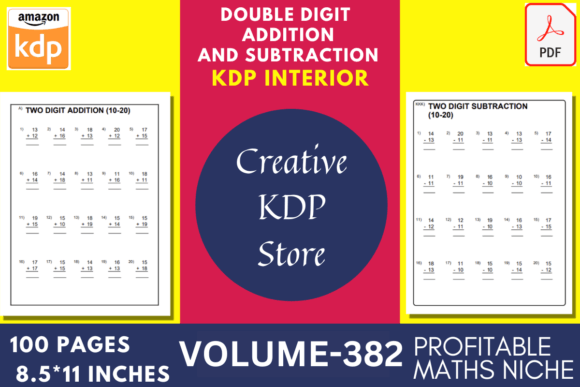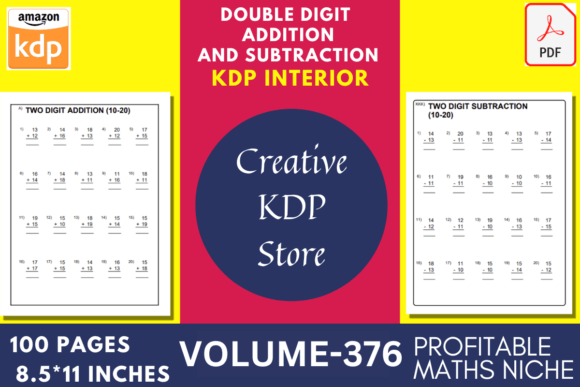
Addition and Subtraction Volume 376: A Practical KDP Interior
Let’s face it, building math fluency is a marathon, not a sprint. Whether you’re an educator piecing together lesson plans, a parent reinforcing skills at the kitchen table, or a publisher building a catalog of educational workbooks, you need reliable materials that save time and deliver results. The Addition and Subtraction Volume 376 interior offers a straightforward path forward. It’s a 100-page, print-ready PDF focusing tightly on the 10 to 99 range, a critical zone for developing real computational confidence.
What makes this specific volume stand out is how it balances depth with usability. The format isn’t cluttered. You get 50 pages of addition, 50 pages of subtraction, and a complete set of answers. The 8.5 x 11 inch dimensions match standard printer paper, and the "no bleed" specification means you can upload it directly to KDP without worrying about formatting errors. High resolution ensures every digit prints sharp, which might sound minor, but makes a real difference in a learner’s ability to focus on the numbers rather than fuzzy typography.
Why the 10-99 Range Is a Sweet Spot for Learners
Single-digit addition is often rote memorization. Three-digit math can overwhelm a developing mind. The 10-99 range hits the sweet spot where students must actively apply place value, carrying, and borrowing concepts. The Addition and Subtraction Volume-376 interior dedicates equal real estate to both operations, allowing for targeted intervention. A student who struggles specifically with subtraction can work through those 50 pages without distraction from unrelated problems.
The inclusion of answer keys isn’t an afterthought—it’s a practical tool for self-checking. This fosters independence in older students and drastically reduces grading time for adults. For a homeschooling parent, this means you can print the entire book, staple it, and have a complete semester’s worth of daily warm-ups. For a classroom teacher, you can pick the specific pages that align with tomorrow’s lesson on regrouping. The structure works because it doesn’t try to do too much.
What the "KDP Interior" Specs Actually Mean for You
If you are new to self-publishing, terms like "no bleed" and "high resolution" can sound technical, but they are essential for a professional product. Bleed refers to print extending to the edge of the paper. If an interior is formatted with bleed and you print it without, you get awkward white edges. This Volume-376 interior is formatted specifically for print without bleed, meaning the problems sit safely within standard margins. This setup dramatically reduces setup time in Kindle Direct Publishing.
The high-resolution factor is equally important. Low-resolution PDFs often look blurry when printed, especially on laser printers. Since we are dealing with math, clarity is paramount. A misaligned or fuzzy "6" versus "8" can cause genuine confusion and frustration. The interiors in this volume are built with crisp, clean typography to avoid these issues entirely.
For the Self-Publisher or Entrepreneur
Your time is best spent on marketing, cover design, and keyword research, not formatting 100 pages of math problems from scratch. Buying a ready-to-upload interior like this one cuts your production time by hours. You can focus on writing a compelling book description, researching keywords like "2nd grade math workbook" or "addition subtraction practice," and choosing a strong cover. The 50/50 split of addition and subtraction is a proven combination in the educational market. This interior can easily become a cornerstone of your catalog or part of a larger "Mastering Math" series.
For the Educator and Tutor
Differentiation is a buzzword in education, but this interior makes it actionable. You can assign the addition pages to one group and subtraction to another. You can print the answer key and provide it to students for self-assessment stations. The high page count—100 pages—means you have enough material for an entire marking period without repeating problems. It becomes a resource you pull from, rather than a rigid curriculum you must follow page by page.
For the Freelance Creator
If you design educational materials for clients, this interior serves as a reliable template or a direct asset. You can rebrand it, combine it with other volumes, or use it to fulfill custom workbook orders. The clean, no-bleed format makes it easy to integrate into larger projects without causing print alignment headaches. It’s a professional-grade asset that elevates your offering.
Observations on Usability and Layout
One underrated feature of this Volume-376 set is the generous spacing. It’s tempting to cram too many problems onto a page to save paper, but that often makes the worksheet intimidating. The layout here respects the learner’s visual field. There’s enough room to show work, which is critical when teaching borrowing in subtraction or carrying in addition. This directly impacts usability. If a child is frustrated by a lack of space, the worksheet becomes a chore. If they have room to breathe and write, they can focus on the logic.
The answer keys are placed systematically at the back of the document. This allows for quick verification without flipping through pages randomly. For publishers, this is a strong selling point to highlight in your product description. Parents specifically search for workbooks with answer keys to avoid the panic of not knowing if the math is correct.
How to Get the Most Out of This Volume
If you are a publisher, consider releasing Volume-376 as part of a structured series. Volume 1 could cover single digits, this volume covers 10-99, and a third volume could handle triple digits. This creates a natural product ladder for your buyers. If you are a parent, break the 100 pages into weekly packets. Five pages a week, Monday to Friday, creates a 20-week math routine. Consistency beats intensity when building math fact fluency.
Another practical tip: print a few pages on cardstock and laminate them. They become reusable practice sheets for a classroom math station or a quiet activity at home. The clean, high-resolution print ensures that even after multiple uses and dry-erase markers, the numbers remain sharp and legible. This extends the life of a single printout significantly.
Final Thoughts on a Solid Educational Asset
The Addition and Subtraction Volume 376 interior fills a specific niche. It’s not a flashy game or a complex curriculum. It’s a straightforward, high-volume practice tool designed for real-world use. For the target audience—busy educators, savvy publishers, and hands-on parents—that directness is exactly the point. It respects your time by being ready to upload or print immediately. It respects the learner by providing clear, well-spaced problems. And it respects the market by adhering to professional print specifications.
Whether you are uploading it to KDP as your next low-content bestseller or printing it for your classroom tomorrow, this interior delivers what it promises: structured, effective math practice without the formatting headaches.