Abstract Notes Templates
Notes are the raw material of ideas. But raw ideas often need a structure that encourages rather than constrains. That is the promise of well-designed abstract notes templates. These templates move beyond simple lines and grids, offering a visual and conceptual starting point for anything from daily journaling to complex project mapping. When you have the right framework, capturing a thought, sketching a plan, or brainstorming a solution becomes a more intuitive process. This article explores what makes these templates valuable, how different kinds of thinkers can use them, and practical ways to integrate them into your workflow.
What Makes Abstract Notes Templates Different
Standard note-taking tools are often rigid. You fill a space with text, check boxes, or follow a pre-set layout. Abstract notes templates take a different approach. They provide a visual structure that invites interpretation, variation, and personalization. Instead of dictating exactly where each word goes, they suggest a flow. This might include geometric shapes, directional arrows, space for sketches, or modular blocks that can be combined and rearranged. The flexibility is built into the design, allowing you to adapt the template to the task at hand rather than forcing your thinking into a mold.
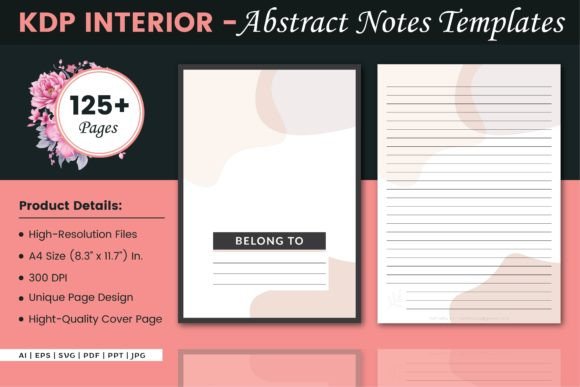
This particular set of abstract notes templates includes 125 pages in A4 format, available in six file types, including AI, EPS, SVG, PDF, PPT, and JPG. That range means you can work with them in almost any application you already use—whether that is Adobe Illustrator for custom graphic layouts, PowerPoint for presentations, or a PDF viewer for simple printing. The fact that it comes as an editable source file in vector format is crucial for anyone who wants more than a static sheet. You can resize elements, change colors, move pieces around, and create entirely new combinations from the existing material.
For Designers and Visual Thinkers
If you work in visual communication, these templates function as a rapid prototyping tool. Instead of starting from a blank canvas each time, you have a base structure that sparks direction. Use the vector files in Illustrator to experiment with spatial arrangements for wireframes, mood boards, or concept sketches. The geometric elements can become containers for images, color swatches, or typography notes. Because the templates are abstract, they avoid locking you into a specific genre. You could use the same layout for a website skeleton one day and a poster collage the next. Keep a master file where you break apart the template components, and save your variations as separate assets for future projects.
For Marketers and Content Planners
Content planning often involves connecting scattered ideas into a coherent narrative. Abstract notes templates provide a non-linear way to map out campaigns, editorial calendars, or brand strategies. Instead of a plain text document, you can use the templates to visually group themes, assign priorities, and identify gaps. For example, take a template with multiple frames and label each frame with a different content pillar: blog posts, social media updates, email sequences, and video scripts. Then use arrows or connecting lines within the template to show how one piece of content leads to another. This method works especially well during brainstorming sessions when you want to capture the big picture without getting lost in details.
For Entrepreneurs and Small Business Owners
Running a business means juggling multiple streams of information. Notes from meetings, ideas for new products, customer feedback, and operational tasks all compete for attention. Abstract notes templates can serve as a central dashboard for these different inputs. Create a weekly template that includes sections for priority tasks, quick captures, and reflective notes. Because the design is visual, you can quickly scan the page and see where your focus is going. Use color coding within the template to separate business areas, such as finance, marketing, and operations. Over time, you develop a visual language that makes reviewing your week more efficient than scrolling through a linear list.
For Educators, Students, and Lifelong Learners
Learning often benefits from connecting concepts rather than memorizing isolated facts. Abstract notes templates support this by offering space for diagrams, hierarchies, and lateral thinking. For educators, the templates can be adapted into handouts that guide students through complex topics without prescribing a single answer. Students can use them for study guides that mix text with visual cues, making retention stronger. The availability of SVG and PPT formats means you can project the templates in class and annotate them in real time, or share them digitally for collaborative work. The key is to treat each template as a scaffold that supports understanding, not as a final product.
Practical Guidance for Getting the Most Out of the Templates
To keep your results clear and effective, start with a specific purpose. Before you open a template, ask yourself what you want to capture or communicate. Are you brainstorming, organizing, or reflecting? Each activity might benefit from a different template layout. The set includes multiple page designs, so browse through them and select one that visually resonates with your task. Avoid the temptation to fill every space. Empty areas in an abstract template are intentional—they provide breathing room for later additions or for your eyes to rest.
Consistency matters if you plan to use the templates over time. Develop a simple system for labeling or dating your pages, especially if you are using the PDF or JPG versions for daily notes. You can create a naming convention based on date and topic, then store the files in folders by week or project. For digital use, the PPT format allows you to duplicate slides and maintain a consistent style across multiple entries. If you prefer analog, print a batch of templates on A4 paper and keep them in a binder. Having a physical archive can be surprisingly useful for reviewing progress and spotting patterns.
Originality comes from how you adapt the templates. Because the source files are editable, you are not limited to the colors or sizes provided. Change the stroke weights, rotate elements, or combine pages from different templates into one composite layout. This is where the vector AI and EPS files shine—you have unlimited control. But even without editing software, the printed templates offer a tactile way to add your own sketches, stickers, or handwritten notes. The template is a starting point, not a cage.
Adapting Templates for Different Platforms and Formats
- Digital note apps: Export the PNG or JPG versions and use them as backgrounds in apps like GoodNotes, Notability, or OneNote. You can write directly on them with a stylus.
- Presentation slides: Import the PPT file into Google Slides or Keynote. Use the abstract layouts as slide backgrounds for workshops or pitches where visual structure reinforces your message.
- Social media content: Deconstruct the SVG or AI files to create quote cards, process diagrams, or behind-the-scenes looks at your creative process. The abstract shapes add visual interest without distracting from the text.
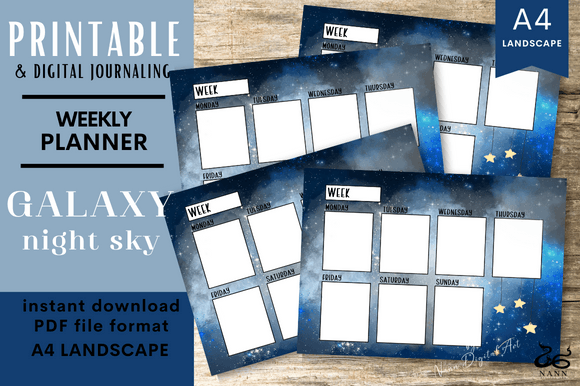
- Printable planners: Print multiple copies of your favorite templates and bind them into a custom planner. You control exactly how many pages of each layout you need, which is impossible with off-the-shelf planners.
Keeping Your Notes Organized and Audience-Friendly
When you use abstract templates, the organization comes from intention, not from the template itself. Decide early on how you will group information. One approach is to dedicate certain templates to specific types of content: one layout for daily logs, another for project incubation, and a third for meeting notes. This creates a predictable system that your brain learns quickly. If you share your notes with others, whether in a team or a client setting, keep the visual language simple. Use no more than three colors per page, and label major sections clearly. The abstract design should aid understanding, not require a decoder.
For those who work in collaborative environments, the editable formats are a major advantage. You can share the AI or PPT file and let team members modify the template in real time during a meeting. This turns note-taking into an active part of the discussion rather than a passive record. After the session, you have a polished set of notes that reflects the group’s thinking, formatted in a way that is easy to revisit.
Building a Habit Around Abstract Notes
Creativity and productivity benefit from routines that have enough structure to stay focused and enough freedom to adapt. Abstract notes templates fit into this sweet spot. Start by setting aside ten minutes at the beginning or end of your day to use one template page. Write a single goal, sketch a quick concept, or capture a stray thought. The act of using a template regularly builds a habit of reflection and planning. Over time, you will develop preferences for certain layouts, and you can refine your system based on what works. The 125 pages in this set give you enough room to experiment without running out of options too quickly.
The extra cover page included in the download is a nice touch for those who want to compile their notes into a bound book or a portfolio. Whether you print it or use it digitally, it gives your collection of templates a finished look, which can be motivating when you are building a consistent practice.
Final Thoughts on Flexible Note-Taking
The value of abstract notes templates lies in their ability to adapt to your thinking style rather than the other way around. They are tools for reducing friction between the idea in your mind and the record on paper or screen. By offering multiple file formats and editable vectors, this set caters to a wide range of workflows, from hand-drawn journals to professional graphics. If you are someone who jots down thoughts, maps out projects, or teaches others, these templates can serve as a quietly powerful part of your process. The key is to use them as a starting point, not a final destination, and to let your own needs guide how you fill the page.